


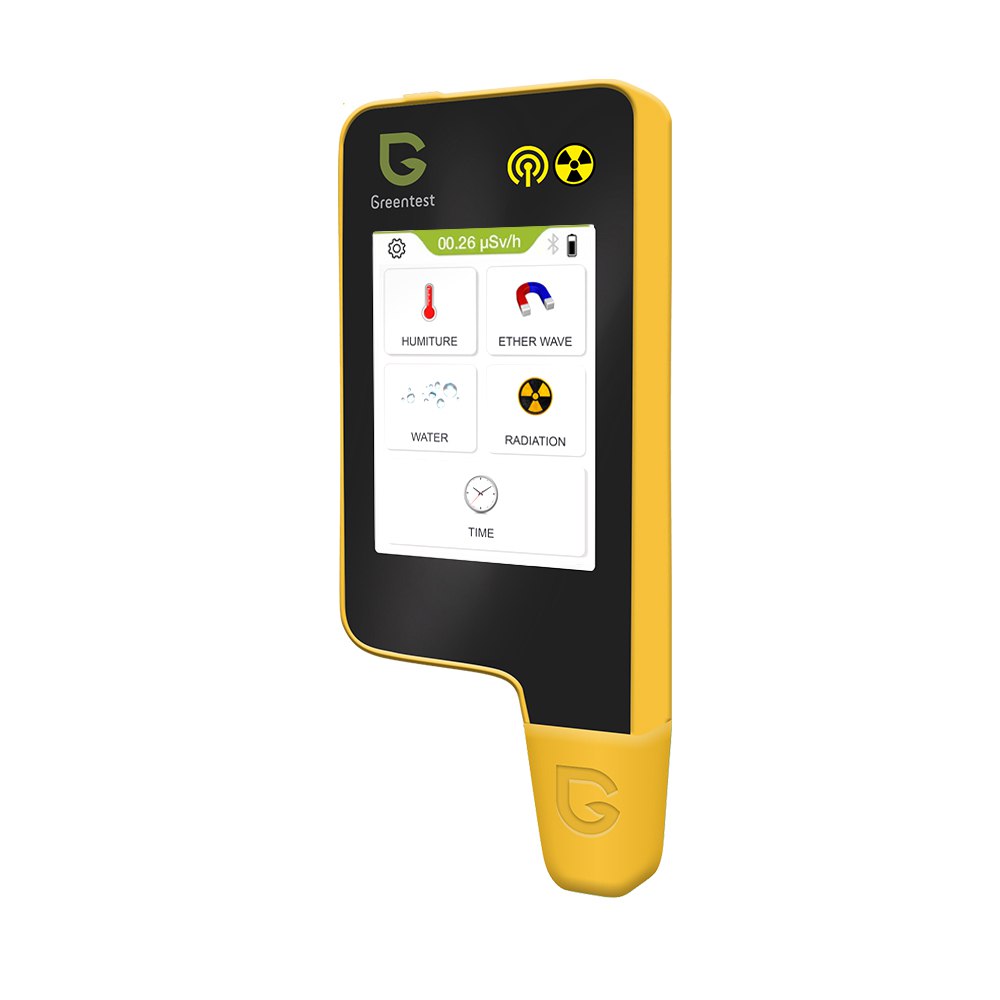
GREENTEST V8
From the kitchen to the bedroom
Six checks, each with a short guide to measuring and reading the result.
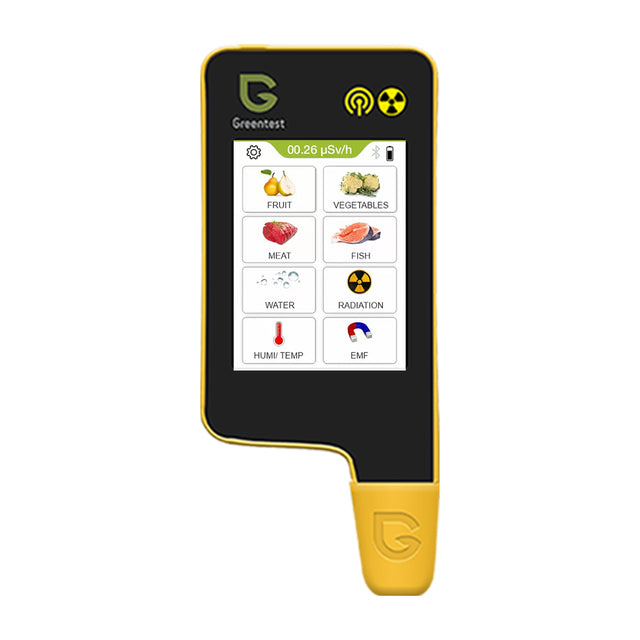 Nitrates in foodKnow what goes on the plate.How to measure and read it
What it shows
An estimate of nitrate in mg/kg for the fruit, vegetable, meat or fish you select, compared with the reference value stored in the device for that food.
How to measure
- 1Let the food reach room temperature — at least an hour out of the fridge.
- 2Select the food in the menu first.
- 3Push the probe fully into the flesh, away from seeds, pits and hollow parts.
- 4Hold still for about 3 seconds, then test two or three spots.
Reading the result
Green: within the device’s reference value for that food. Yellow or red: above it. Leafy greens, beetroot and radishes naturally contain the most nitrate.
Good to know. Fresh, raw food only — not cooked food or liquids. It does not detect pesticides or heavy metals.
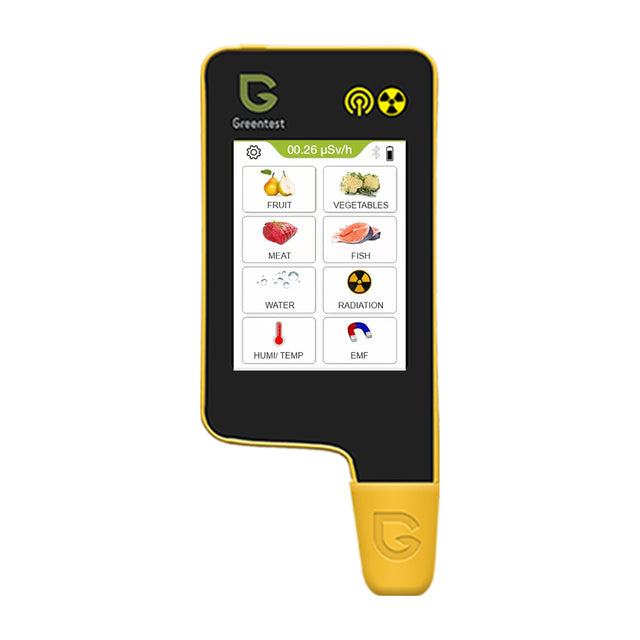 Water (TDS)How’s the tap water today?How to measure and read it
What it shows
Total dissolved solids in mg/l (ppm): the minerals and salts dissolved in the water.
How to measure
- 1Pour the water into a clean glass and let it reach room temperature.
- 2Select Water and dip the probe into the sample.
- 3Read the value, then rinse and dry the probe.
Reading the result
mg/l (ppm) · WHO taste scale
WHO taste guidance: under 300 excellent, 300–600 good, 600–900 fair, 900–1200 poor, above 1200 unacceptable. Filtered water reads very low — that is normal.
Good to know. TDS is not a safety test: it does not show bacteria, lead or pesticides, and WHO sets no health-based limit for it.
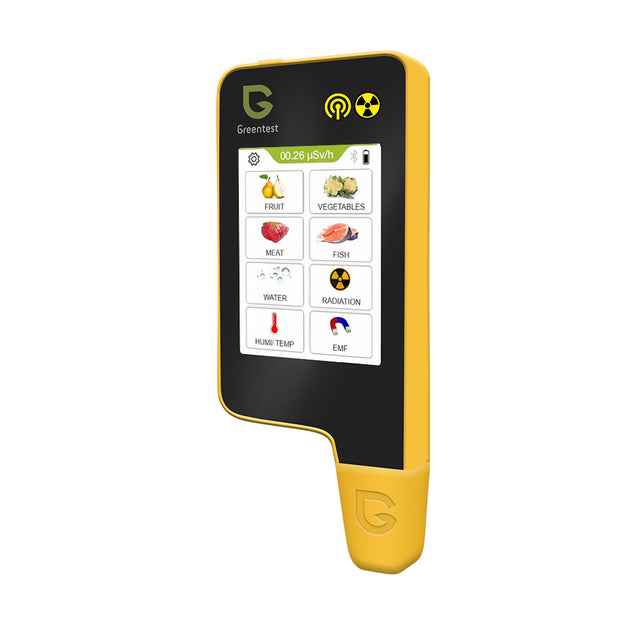 Background radiationYour background level, always on screen.How to measure and read it
What it shows
The gamma background dose rate in µSv/h, at the top of the screen as soon as the device is on. It can also add up a cumulative dose (START/STOP).
How to measure
- 1Switch the device on and keep it still in one place.
- 2Watch the value for about a minute — it naturally fluctuates.
- 3Compare readings from the same place over time.
Reading the result
Natural external radiation in Germany averages about 0.7 mSv a year — roughly 0.08 µSv/h (BfS). Rock, soil and altitude change it. What matters is a value that stays well above your usual level in the same place.
Good to know. A household indicator, not a certified dosimeter. It does not measure radon.
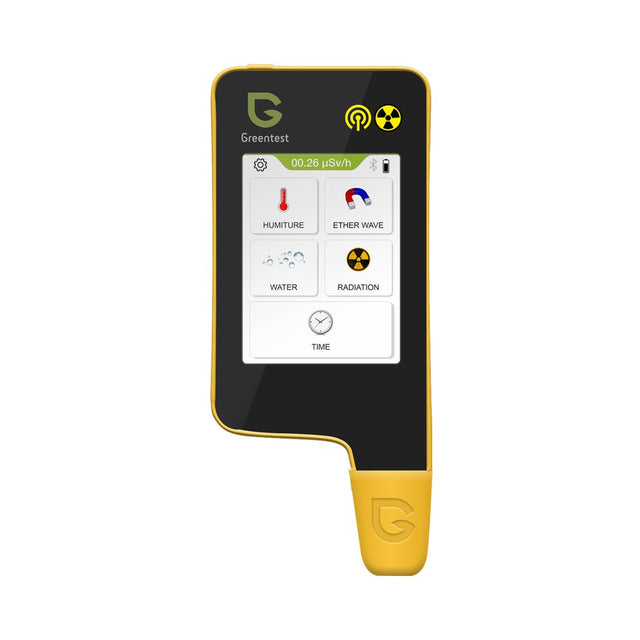 TemperatureHow warm it really is.How to measure and read it
What it shows
Air temperature in °C.
How to measure
- 1Open Humiture — temperature and humidity share one screen.
- 2Keep the device away from your hand, direct sun and heaters for a few minutes before reading.
Reading the result
WHO recommends indoor temperatures of at least 18 °C in the cold season.
Good to know. It measures the air around the device, not food or body temperature.
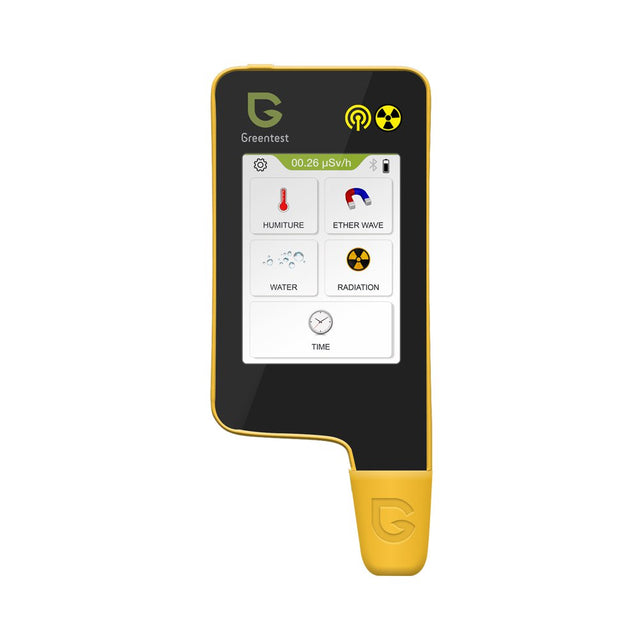 HumidityDry, comfortable or damp?How to measure and read it
What it shows
Relative air humidity in %.
How to measure
- 1Use the same Humiture screen.
- 2Let the value settle for a few minutes in the room you are checking.
Reading the result
The US EPA recommends keeping indoor humidity below 60%, ideally 30–50%. Long periods above 60% encourage mould.
Good to know. Near a window, kettle or shower the value changes quickly — measure in the middle of the room.
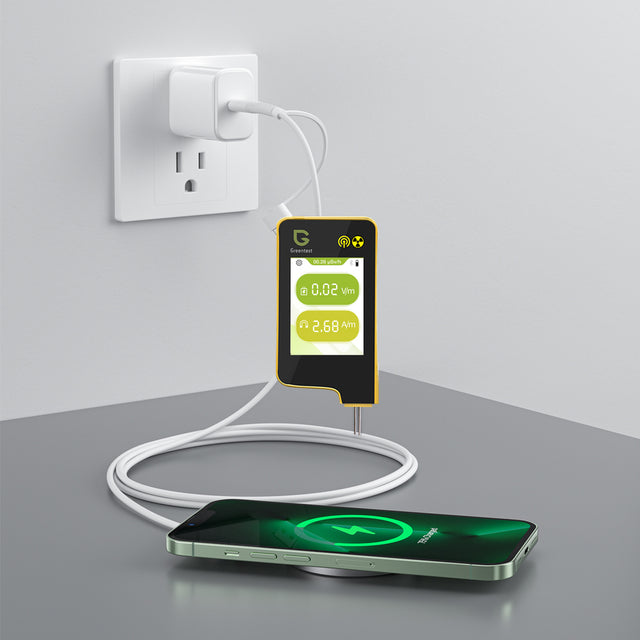 Electromagnetic fieldFind where the field is strongest.How to measure and read it
What it shows
A relative level of the electromagnetic field around the device (Ether wave mode).
How to measure
- 1Select Ether wave.
- 2Move slowly towards and away from a source — a charger, router or microwave oven — and watch the level change.
Reading the result
Use it to compare places and find where a field is stronger.
Good to know. A comparison tool, not a certified measurement or a health assessment.